Most commercial lighting schedules say "or approved equal." Here's what engineers check before they approve a substitute — and how to build a submittal that passes the first time.
Almost every commercial job comes with a lighting fixture schedule that names a specific brand and model for each fixture type, followed by three words that matter a lot to your bid: "or approved equal." Swapping in an equal fixture can tighten your number and shorten lead times, but only if the substitute actually gets approved. A rejected submittal costs you days, sometimes weeks, and can put the whole job behind.
What "or approved equal" really means
The fixture named on the schedule is the basis of design. An equal has to meet or beat its performance, fit the same space, and work with the same controls. The engineer or architect decides whether it qualifies during submittal review. Before you price anything, read the lighting section of the electrical specifications — some jobs say "no substitutions" or require prior approval before bid day.
The match checklist
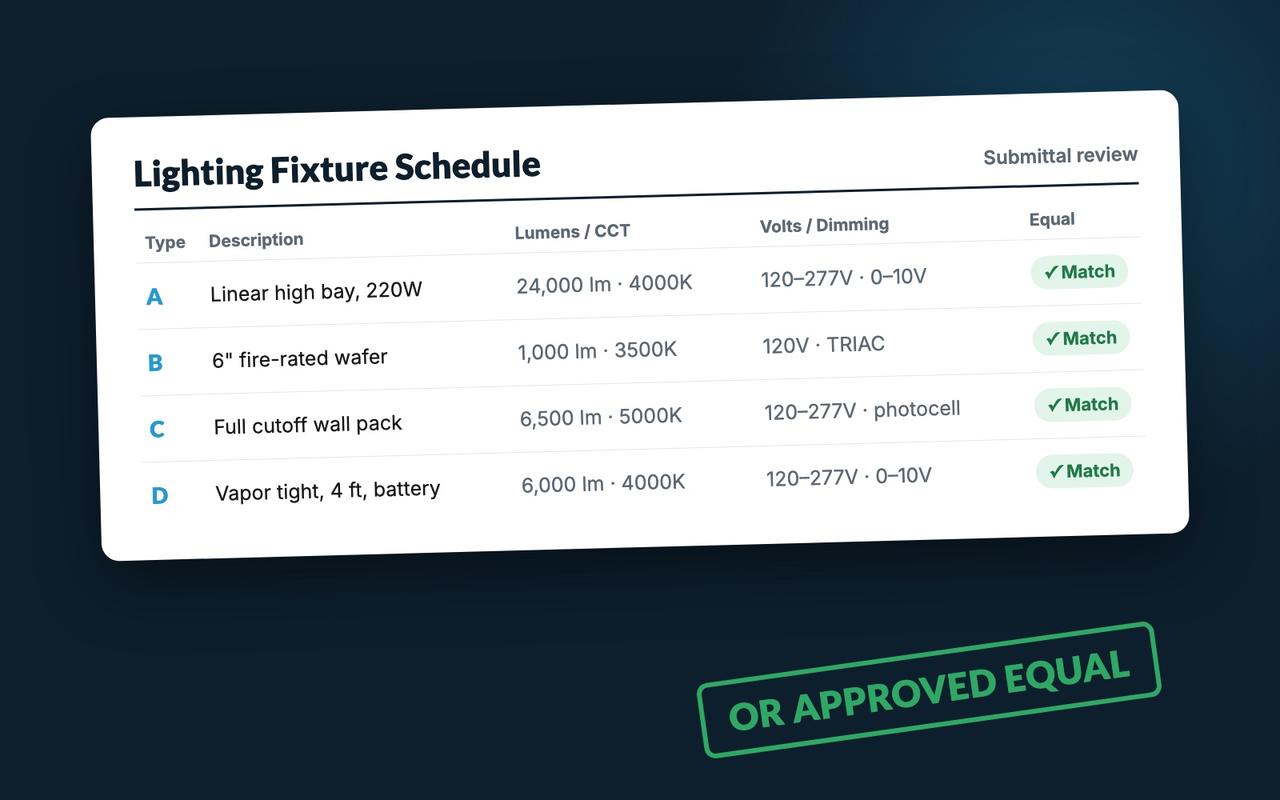
Matching wattage isn't enough. These are the details reviewers compare line by line:
- Light output: delivered lumens and distribution close to the basis of design — not just similar wattage.
- Color: the same color temperature (CCT) and a CRI that meets or beats the spec.
- Electrical: the same voltage range (120–277V vs. 347V or 480V) and the same dimming type (0–10V, TRIAC, DALI).
- Fit and mounting: ceiling type, recessed opening, overall size, mounting height, pendant or surface options.
- Location rating: damp or wet listing, IP rating, NSF for food areas, impact (IK) rating, temperature range.
- Listings: UL or ETL safety listing, DLC when a utility rebate depends on it, and fire-rated assembly listings where required.
- Options: emergency battery, occupancy sensors, photocells, finish color and warranty length.
"An equal isn't the cheapest fixture that fits the hole. It's the one the engineer can approve without a second round of comments."
Build a submittal package that gets approved
- One cut sheet per fixture type, with the exact configured part number and options highlighted.
- A side-by-side comparison against the basis-of-design fixture for lumens, CCT, CRI, wattage, voltage and dimming.
- Photometric (IES) files ready if the engineer asks for a layout check.
- Copies of the listings — UL/ETL, DLC, fire-rated assemblies — that the spec calls for.
- Warranty terms that match or beat the specified fixture.
Where equals make the biggest difference
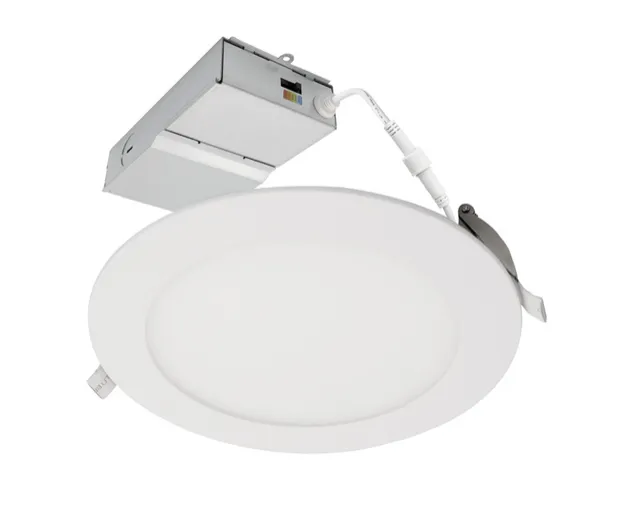
Equals work best in the workhorse categories where plenty of listed options exist: high bays, area and parking lot lights, wall packs, strip lights, vapor tights, wafers and recessed downlights. Highly architectural or custom fixtures — decorative pendants, custom linear runs — are harder to substitute and usually worth leaving as specified.
Why equal submittals get rejected
- Lower light output than the basis of design.
- Wrong color temperature or a CRI below the spec.
- A dimming type that doesn't match the controls on the job.
- Missing emergency battery, sensor or photocell options the schedule calls for.
- No DLC listing on a project counting on a utility rebate.
- An incomplete package — missing cut sheets, highlights or listings.
Have a lighting schedule on your desk? Send it to us and we'll match equal fixtures type by type and put together the submittal package for you. Questions? Call (830) 538-0991.
Fixtures from this article
See all products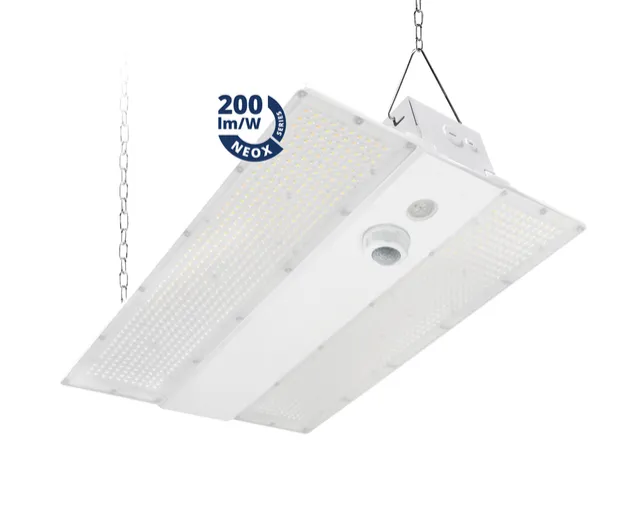
New to a term? See our commercial lighting glossary.
Need fixtures for your next project?
Send us your lighting schedule and we'll match equal fixtures, provide submittals, and ship to your job.